

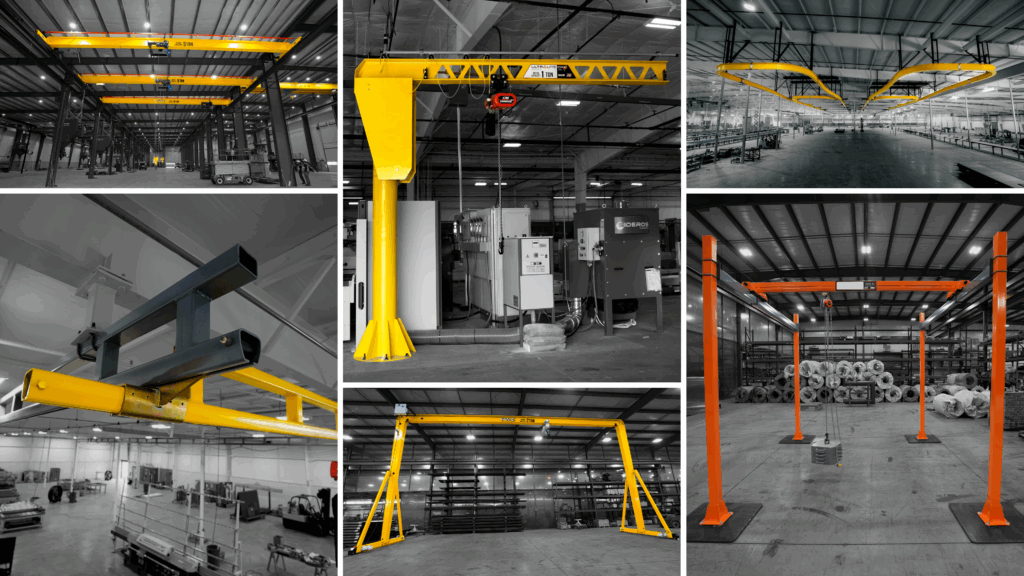
Introduction to the Types of Overhead Cranes
Choosing the right overhead crane isn’t just a technical decision, it’s one that directly impacts your productivity, safety, and bottom line. The wrong setup can slow operations, create unnecessary obstacles, and turn simple lifts into time-consuming challenges. But the right crane? It streamlines your workflow and keeps your workspace running efficiently.
In this article, we’ll break down the four main types of overhead cranes so you can clearly understand which system fits your operation. By the end, you’ll be equipped to make a confident decision and know exactly what your next step should be.
The lifting industry typically classifies overhead cranes into (4) main categories: jib cranes, gantry cranes, monorail cranes, and bridge cranes.
Jib Cranes
What is a Jib Crane?
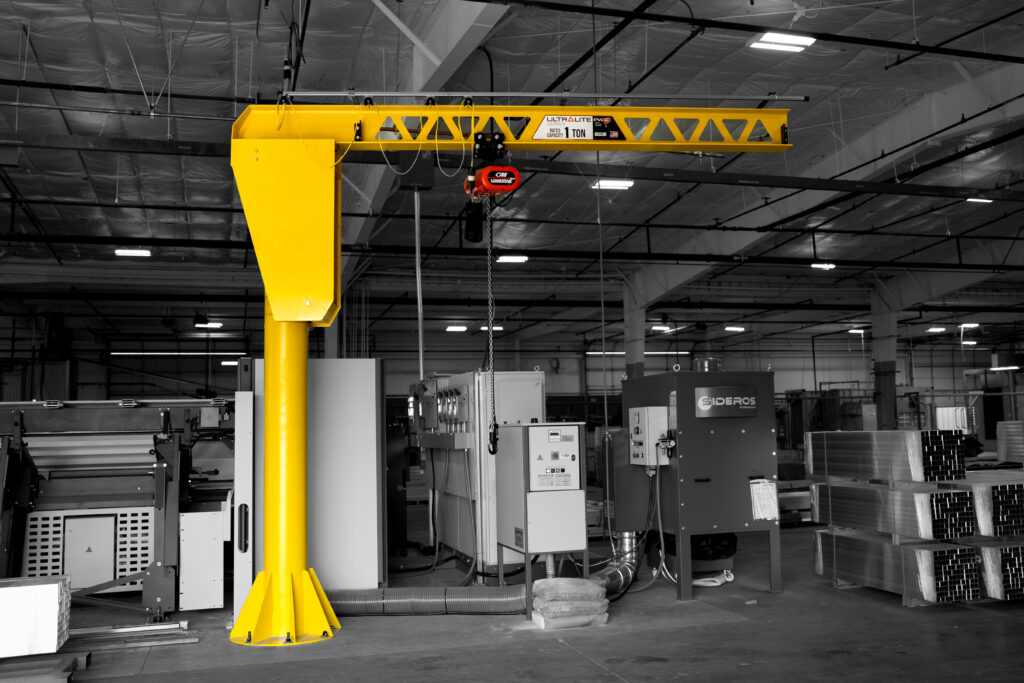
If you’ve never come across a jib crane before, picture an upside-down “L.” Simple in design, but incredibly effective. These cranes are typically mounted to the floor with their own support column or attached to an existing building beam, giving them a compact footprint without sacrificing functionality.
Most jib cranes are paired with an electric chain hoist and can be rotated manually, allowing operators to move materials quickly and precisely within a defined area. That ease of movement is exactly what makes them so valuable, they’re built for speed, repetition, and efficiency over short distances.
Jib Crane Applications
Jib cranes shine in environments where consistent, localized lifting is required. You’ll commonly find them in production lines, assembly stations, factories, and even mining operations, anywhere materials need to be moved quickly within a limited workspace.
While they don’t offer the heavy lifting capacity of larger crane systems (typically topping out around one ton), that’s not really their purpose. Their strength lies in reliability, simplicity, and the ability to streamline repetitive tasks without slowing down your operation.
Jib Crane Cost
One of the biggest advantages of a jib crane is its affordability. A one-ton, floor-mounted system typically starts around $5,000, making it a cost-effective solution for many facilities.
Costs will increase with higher lifting capacities, but jib cranes are generally designed for lighter loads—usually a few tons at most. If your needs align with that range, they deliver strong value without a major investment.
Gantry Cranes
What is a Gantry Crane?
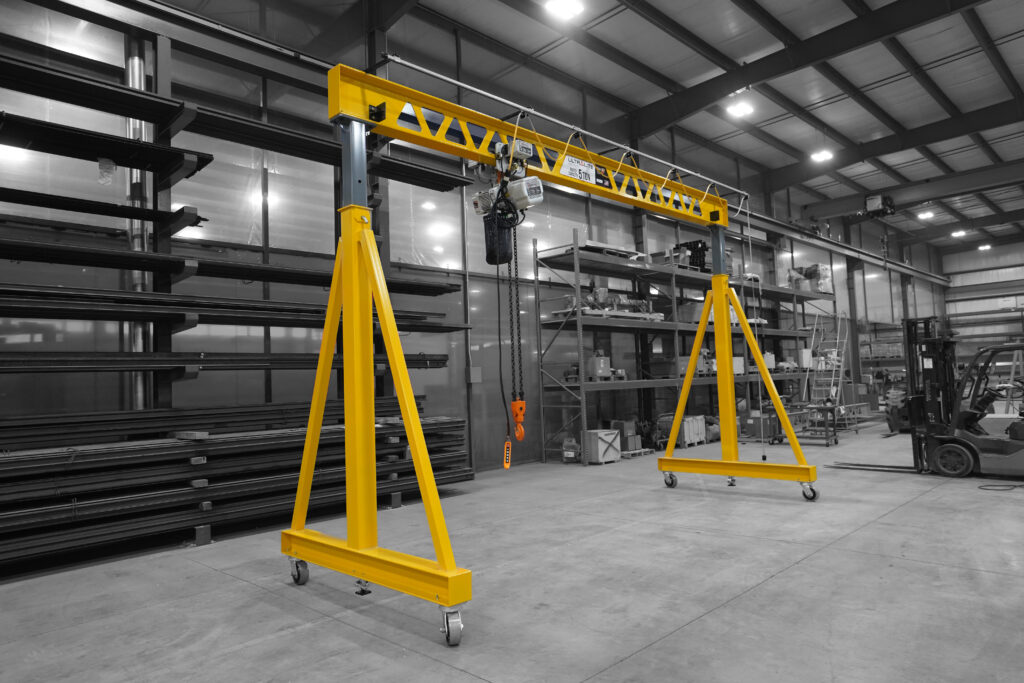
A gantry crane is exactly what it sounds like, a crane built on top of a gantry. A gantry is a freestanding, movable framework designed to support heavy equipment. When you combine the two, you get a powerful and flexible lifting system that doesn’t rely on your building’s structure for support.
Unlike fixed overhead cranes, gantry cranes stand on their own legs and can often be moved, giving you lifting capability wherever your work demands it.
Gantry Crane Applications
One of the biggest advantages of gantry cranes is their range. They can be small enough to fit in a garage or large enough to handle massive industrial loads. At the high end, you’ll see them in shipping ports, rail yards, and heavy industrial sites moving containers and large materials across wide areas.
Smaller gantry cranes are commonly used in garages, maintenance shops, and fabrication facilities. Many are equipped with heavy duty casters, allowing them to roll easily from one area to another. This mobility makes them one of the most versatile crane options available.
If your workflow requires a crane that can move with you and handle moderate loads, a portable gantry crane is a great fit. For outdoor applications or heavier lifting on a track system, a larger gantry crane may be the better solution.
Gantry Crane Cost
Smaller gantry cranes are surprisingly affordable for the value they provide. For around $4,000, you can purchase a unit capable of lifting several thousand pounds. This makes them a practical option for small businesses, home mechanics, and hobbyists.
As size and lifting capacity increase, so does the cost. Large industrial gantry cranes can reach into the millions depending on their specifications. At the extreme end, the Taisun Crane, one of the largest in the world, had an estimated build cost of around $40 million.
For most applications, the investment will be far lower, but the scalability of gantry cranes is exactly what makes them such a valuable solution across a wide range of industries.
Monorail Cranes
What is a Monorail Crane?
Monorail cranes stand out from other crane systems thanks to their unique design and movement.
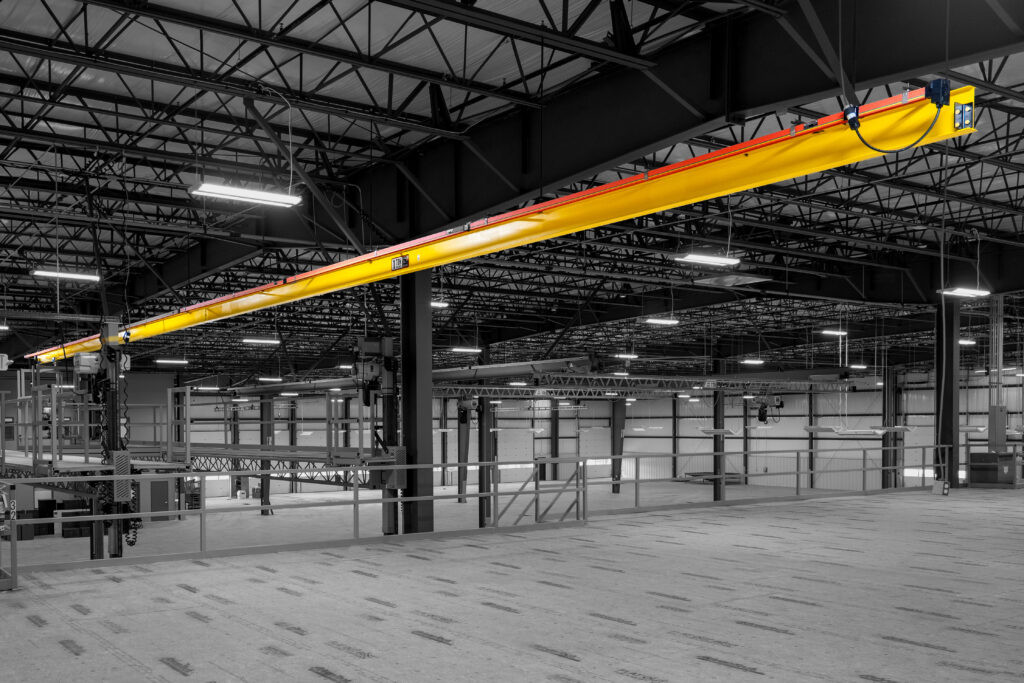
Unlike a traditional bridge crane, the hoist on a monorail crane does not travel side to side. Instead, it moves up and down along a fixed path. What makes these systems especially useful is that the track itself can be shaped to follow curves, allowing the crane to navigate around obstacles and fit seamlessly into your facility layout.
That ability to follow a custom path is a major advantage when you need to move materials through tight spaces or around existing structures.
Monorail Crane Applications
Because of their flexibility, monorail cranes are commonly used in assembly lines and production environments where materials need to follow a specific route. They are ideal for moving items from one workstation to another in a controlled, repeatable path.
However, that flexibility comes with some limitations. Since the system is designed to follow curves and specific paths, it does not typically support the same lifting capacity as a standard single girder bridge crane.
Most monorail cranes have a lifting capacity of up to around six tons, with many systems operating below that range.
Monorail Crane Costs
The cost of a monorail crane depends largely on the complexity of the system. Factors like the length of track, the number of curves, and the overall layout will all influence the final price.
As with any crane system, lifting capacity also plays a major role in cost. The more weight the system needs to handle, the more you can expect to invest.
Bridge Cranes
What is a Bridge Crane?
Bridge cranes are what most people picture when they hear the term “overhead crane.” They are installed within a building and typically use the structure itself for support, making them a permanent and powerful part of a facility’s workflow.
One of the key advantages of a bridge crane is its range of motion. The hoist moves left and right along the beam, and in many systems, the entire crane can travel forward and backward along a runway. This allows operators to move heavy materials across large sections of a building with precision and efficiency.
Bridge cranes are most commonly available in two configurations: single girder and double girder. The girders are the main beams that span across the runway and support the load.
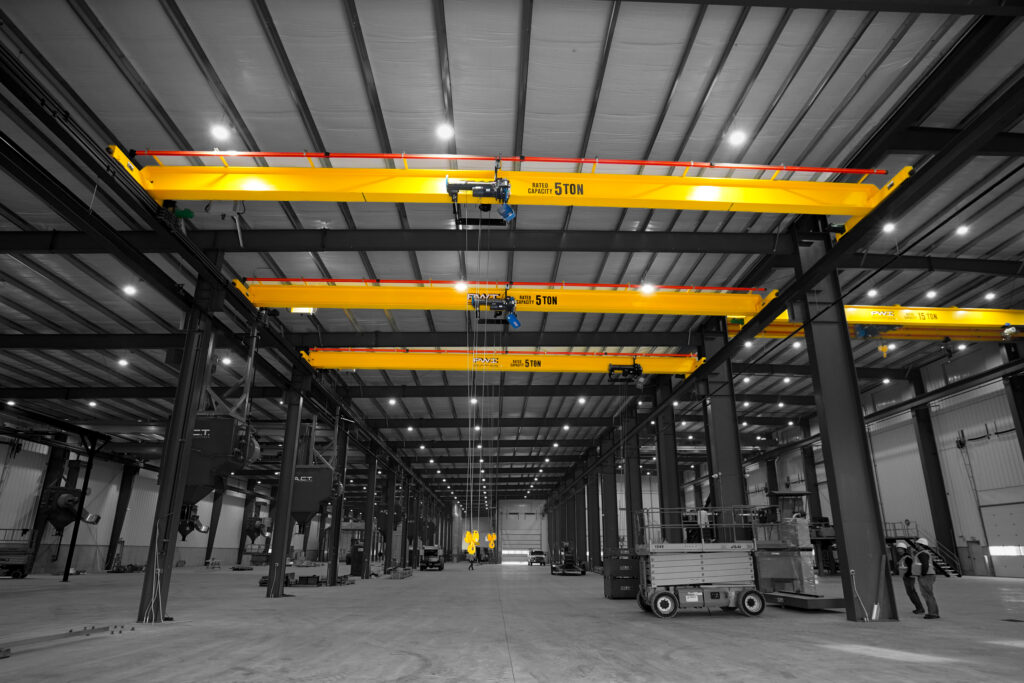
Single Girder Crane
A single girder bridge crane uses one I beam to support the load. These systems are typically lighter, more compact, and more cost effective than double girder cranes.
While they have a lower lifting capacity, they are still capable of handling substantial loads, usually up to around 15 tons. For many facilities, this provides more than enough power for daily operations without the added cost of a heavier system.
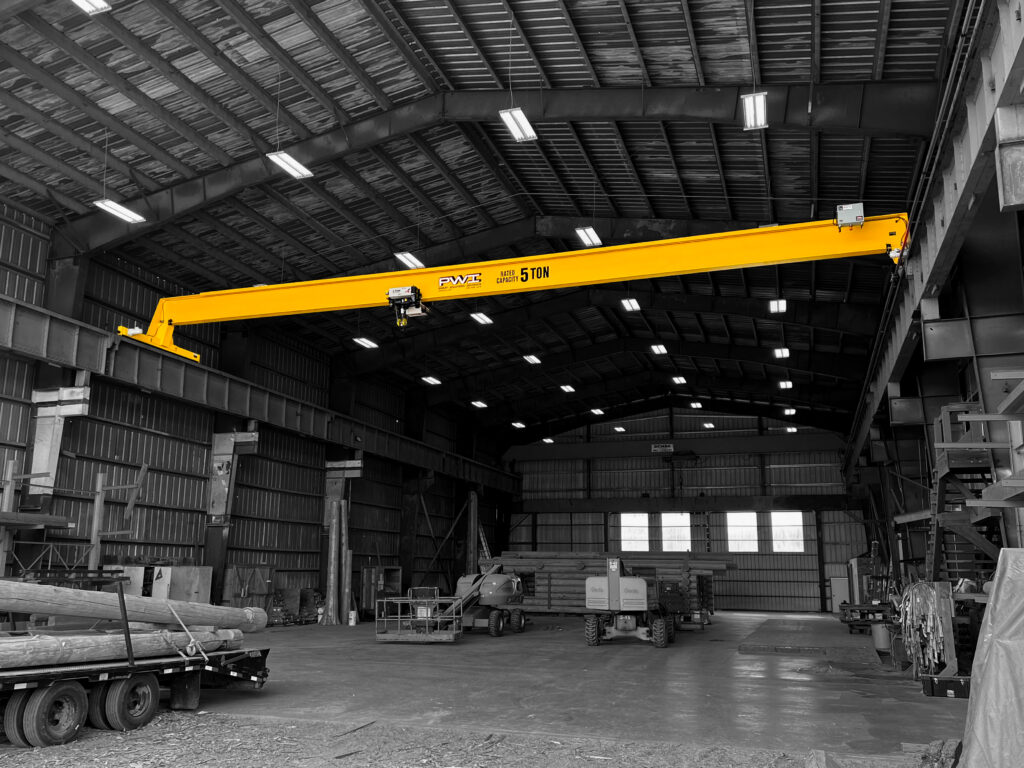
Double Girder Crane
A double girder bridge crane uses two beams to support the load, giving it significantly greater strength and stability. These cranes are designed for heavier duty applications where higher capacities and more demanding performance are required.
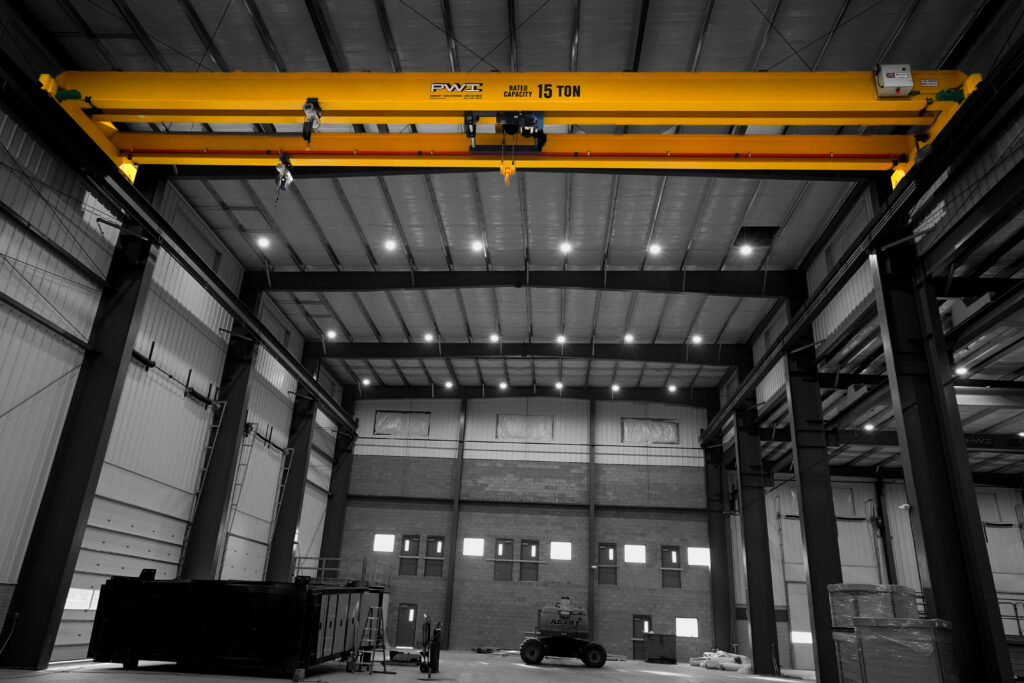
Bridge Crane Applications
With lifting capacities that can reach up to 250 tons, double girder cranes are built for serious industrial work and are often used in large scale manufacturing and heavy material handling.
Bridge cranes are used across a wide range of industries, including automotive manufacturing, steel production, paper mills, and more. Any operation that requires moving heavy materials within a building can benefit from a bridge crane system.
They are known for their reliability and their ability to dramatically improve efficiency by reducing manual handling and streamlining material movement.
Bridge Crane Cost
Single girder bridge cranes are generally the more affordable option, making them a great fit for lighter duty applications or facilities with tighter budgets.
Double girder cranes come at a higher cost, but that investment brings increased lifting capacity and performance. If your operation requires handling very heavy loads, the added expense is often necessary to get the job done safely and efficiently.
Conclusion
By now, you should feel much more confident navigating the world of overhead cranes and that confidence goes a long way when it’s time to make the right investment for your operation.
More importantly, you now have a solid understanding of how each type of crane functions, where it excels, and how the right choice can improve efficiency, safety, and long-term performance in your facility. We’ve also touched on both upfront costs and the bigger financial picture, giving you a clearer sense of what to expect.
Of course, every operation is different, and there’s always more to consider when selecting the ideal solution. If you’re weighing your options or want guidance tailored to your specific needs, it’s worth having a conversation with an expert.
The PWI team is here to help you take the next step. Submit a free quote or give us a call at (574-646-2015), and we’ll walk you through your options, answer your questions, and provide a clear path toward the overhead crane system that will best support your business.